On this page
- What does the cargo history tell you about seaworthiness?
- Are phinisi boats stable?
- Is there a published safety record for phinisi boats?
- What do the 2026 sinkings off Labuan Bajo show?
- Which documents should you ask to see?
- What equipment should you check on board?
- How much do weather, season and crew decide on the day?
- What should you ask an operator or seller before paying?
- What quick answers do guests and buyers need on safety?
- Which sources support this page?
- How do I reach the desk?
By Pinisi Boat Editorial Desk
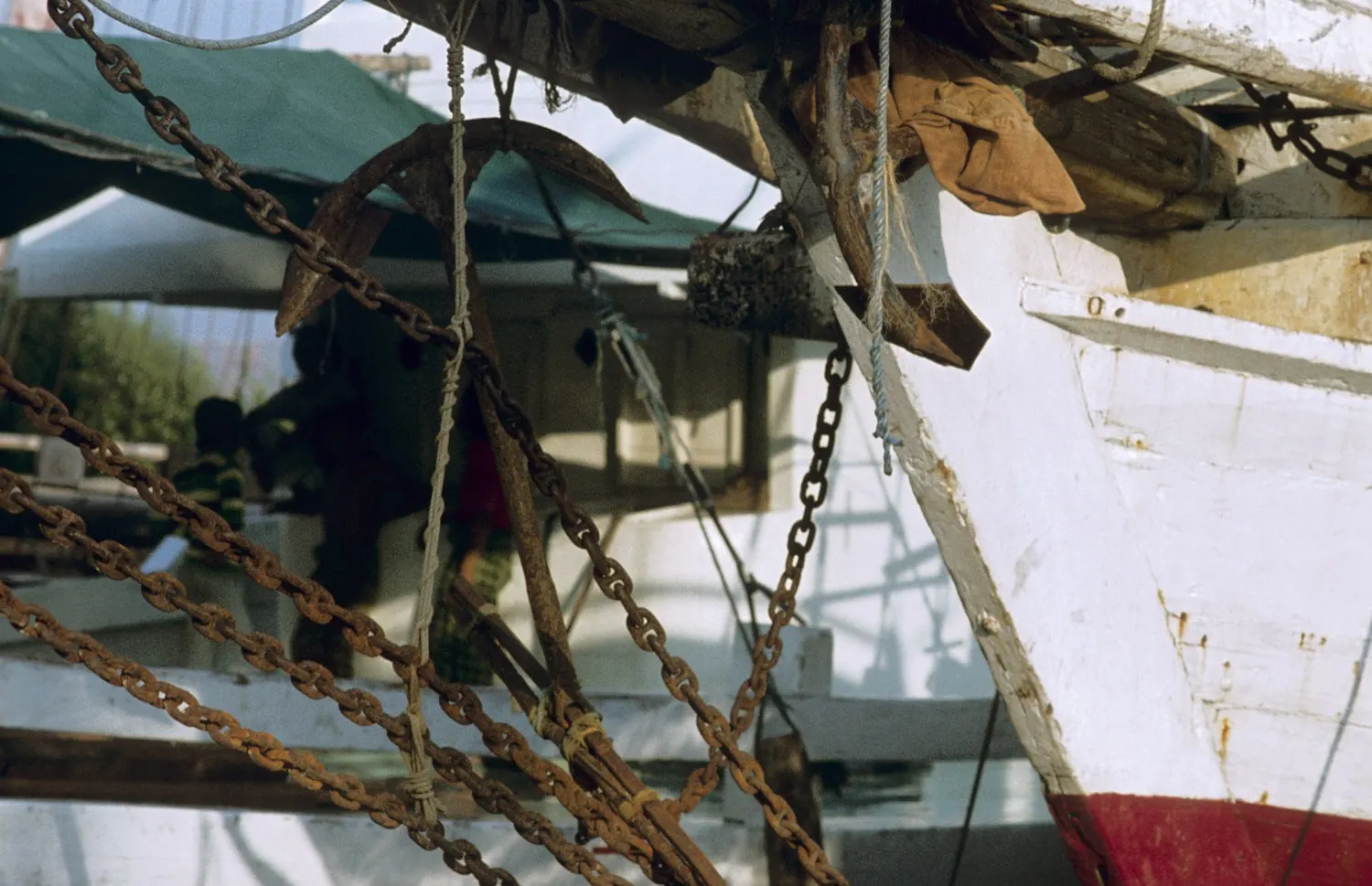
Whether a phinisi is safe depends on the individual boat, its upkeep, its crew and the conditions on the day, not on the type. We have found no published safety statistics, and two wooden tourist boats described as pinisi or phinisi sank off Labuan Bajo in September and October 2026. Before paying, see current certificates, check the equipment yourself and question the operator directly.
What does the cargo history tell you about seaworthiness?
Pinisi-rigged ships were built to earn a living at sea. Wikipedia's Pinisi article records them carrying inter-island cargo such as timber from Kalimantan to Java, calling at traditional ports like Sunda Kelapa in Jakarta and Paotere in Makassar, and widely used by Buginese and Makassarese seafarers. Before Indonesia's trading fleet was motorised in the 1970s and 1980s, they were the largest Indonesian sailing ships. As late as 2011 a pinisi-rigged motor vessel 50 metres long, with a capacity of about 500 tons, was completed in Bulukumba.
That history is a fair reason to take the type seriously. It is a weak reason to trust one particular boat. A trading career describes a fleet, and it tells you nothing about the planks, engine, wiring and crew of the vessel you are about to board.
The label itself needs care too. The same article notes that the word is now often used for most types of Indonesian wooden ship, including charter and diving vessels marketed as phinisi. A brochure that says phinisi boat has not established that the vessel has the rig, the hull or the working past people associate with it. Read it as a sales word until the vessel's own papers say more.
Are phinisi boats stable?
Nobody can honestly answer that for the whole class, because the rig sits on more than one shape of hull. Wikipedia describes three general types:
- Palari: the older form, with a curved stern and keel, twin quarter rudders and a low foredeck, raised from a pajala hull.
- Lambo: the type favoured by motorised vessels.
- Jonggolang: a mid-twentieth-century type, built high from the start.
We have found no published stability calculations for any of these, and no test data comparing them, so we make no statement that a phinisi is steady or tender in rough seas. The one technical comment we can cite comes from Kasten Marine Design, which lists box-shaped midsections, short scarf joints and plain steel bolts among its concerns with cargo hulls, and recommends a surveyor and an inclining test before conversion.
What you can do is make the question specific. Find out which hull form the boat has and what has been added since launch. Ask who assessed stability for the vessel as it stands today, with its present deck structures, tanks and guest numbers, whether an inclining test was done, and ask to read the result. If no such paper exists, that is an answer you can weigh. For a planned passage, ask the captain which sea conditions would make them shelter or turn back.
Is there a published safety record for phinisi boats?
We have not found one: no accident rate, no incident register and no loss figures specific to pinisi or phinisi vessels. Any percentage you read on the subject, or any claim that one operator is the safest, should come with its source shown to you.
In practice, the operator's own history is the only record you can request. Ask about groundings, fires, engine failures and anyone lost overboard on that vessel, and what was changed afterwards.
What do the 2026 sinkings off Labuan Bajo show?
Two press reports give specifics, and both investigations were open when they ran. Divernet reported on 15 October 2026 that Feronia, a pinisi-style wooden dive boat, went down near Tatawa Island on 13 October with 30 people aboard. Twenty-nine were rescued and one person was still missing at the time of the report. The Labuan Bajo harbour authority was reported as saying she had been built at Bira, had been in service about two months, held the required sailing documents and was considered seaworthy.
The Bali Times reported that KM Yukai, a traditional phinisi carrying 13 tourists and 6 crew, struck a shallow reef near Tanjung Sture at low tide at about 6:30 a.m. on 27 September 2026 and sank. All 19 people were evacuated with no injuries. Police were questioning the captain and a crew member, with no final finding announced.
Neither report states a cause, and both investigations were open. Whatever the finding, ask for the stability assessment, how the crew accounts for everyone aboard, who keeps watch and which charts they use. The reports give no rate, and we hold no count of boats working these waters, so two losses cannot be turned into a risk figure.
Which documents should you ask to see?
Start with the vessel's registration and its safety, class and pollution-prevention certificates. A general summary of Transport Ministry rules for foreign vessels on permitted activities lists these among the papers that may be required. We use them as a sensible request for any boat, which is different from a legal minimum for every boat. By the ministry's definition, an Indonesian-flagged vessel is one entered in the Indonesian ship register.
| Paper | Why ask for it | What to check |
|---|---|---|
| Registration or nationality certificate | Identifies the vessel and its flag | Name and details match the boat in front of you |
| Safety certificate | Shows an authority has looked at the vessel's safety | Issue and expiry dates, and any passenger limit stated |
| Class certificate | Shows whether a classification body stands behind the hull and machinery | Which body, what date, and any conditions noted |
| Pollution-prevention certificate | Indonesian pollution rules apply to vessels in Indonesian waters | Validity and vessel name |
| Crew list and qualifications | Shows who is actually sailing | Names match the people on board on your dates |
On pollution, PM 29 of 2014, amended by PM 24 of 2022 dated 20 September 2022, applies to vessels operating in Indonesian waters, according to the Directorate General of Sea Transportation. Its subject is pollution, so a valid paper under it says nothing about life rafts.
We could not confirm the gross-tonnage thresholds that decide which registration papers apply, which harbour office has authority, or when class rules reach a wooden vessel. Ask the operator which rules they say apply to that boat and which office issued each paper. Our page on maritime regulations for phinisi yachts sets out what is on record.
What equipment should you check on board?
This is our own checklist, written from a passenger's point of view. It does not come from a regulation. Ask the crew to show you each item rather than point at a locker.
- Life jackets: enough for everyone aboard, in adult and child sizes, stored where you can reach them from your cabin at night.
- Life rafts: capacity against the number of people aboard, the last service date, and who launches them.
- Radio and distress signals: a working marine radio, flares or a beacon, and who can operate them if the captain is hurt.
- Fire protection: extinguishers in date near the engine room and galley, smoke detection in cabins, and a second way out of each cabin.
- First aid: a stocked kit, a named person trained to use it, and a plan for reaching a clinic from your route.
- Tender: a reliable engine, spare fuel, and a named driver after dark.
- Briefing: a muster point and a head count, explained to you before departure.
The briefing is the easiest item to test. If nobody offers one before the anchor comes up, ask for it, and notice how the crew responds.
How much do weather, season and crew decide on the day?
In our judgement, more than the word on the brochure. Nature can change a trip before you even reach the boat, as the airport closure on our Komodo page shows, so ask what happens to your itinerary and your money if the route cannot be reached.
We print no months here. Ask the operator for the usual wind and sea pattern on your route and dates, and what they did the last time conditions turned.
On crew, ask how many people will be aboard, who holds the master's qualification, how long that person has worked this route, and who keeps watch overnight. It also helps to know whether the plan is to motor, sail or do both, which our page on how a pinisi sails explains.
What should you ask an operator or seller before paying?
- Can I see current copies of every certificate, in this vessel's name, before I pay a deposit?
- Who assessed the boat's stability in its present form, and may I read the result?
- When was the hull last inspected out of the water, and by whom?
- What incidents has this vessel had, and what changed afterwards?
- Who is the master on my dates, and what qualifications do they hold?
- Who decides to cancel or reroute for weather, and what happens to my payment if they do?
- What insurance covers the vessel and its passengers, and may I see the policy?
- If I am buying, may my own surveyor inspect the boat before I commit?
Put the same list to us. A request through this desk can lead to a contract with one of our companies, so test our offer as you would anyone else's, and look in it for the company's name, any fee and the payment terms. For how a charter is arranged, read our guide to hiring a phinisi yacht.
What quick answers do guests and buyers need on safety?
Are phinisi boats safe as a type?
Not as a type. Safety belongs to the individual vessel, its maintenance, its crew and the conditions, so judge the boat you are boarding rather than the category.
Are pinisi boats stable in rough seas?
That has to be answered boat by boat. Ask for the stability assessment of the vessel as it is now, including anything added to the deck, ask whether an inclining test was done, and ask the captain which conditions would make them turn back.
Should I trust a boat because it is called a phinisi?
No. The name alone proves nothing about the rig, the hull or the condition.
Do Indonesian pollution rules apply to these boats?
Yes. PM 29 of 2014, amended by PM 24 of 2022, applies to vessels operating in Indonesian waters. It addresses pollution prevention and does not settle passenger safety as a whole.
Can a volcanic eruption disrupt a Komodo trip?
Yes. Komodo Airport has closed for an eruption before, as our Komodo page records, so ask how your plan handles a closed route.
Which sources support this page?
- Wikipedia: Pinisi (checked Oct 2026)
- JDIH Kemenhub: Transport Ministry legal database
- Directorate General of Sea Transportation: PM 29/2014 and PM 24/2022
- Wikipedia: Komodo Airport
- Kasten Marine Design: Indonesian cargo pinisi as a yacht
- Divernet: Komodo dive-boat sinking (15 October 2026)
- The Bali Times: tourist boat sinks near Labuan Bajo (28 September 2026)
How do I reach the desk?
The editorial desk takes questions about these sources and claims, and it does not judge whether a vessel is seaworthy. WhatsApp 6281139414563 or email bd@juaraholding.com.
Send the desk what you need: build, buy, or charter, plus rough size and timing.
Ask the desk on WhatsApp bd@juaraholding.com